Technique · November 20, 2026
By Justin Comstock · JazzValve creator, longtime guitarist and adult trumpet learner · Updated November 20, 2026
Trumpet Pedal Tones: What Pedal C Is and How to Try It
Pedal C is an octave below the open C beneath the staff. Try it briefly, then return to the sound you already know. It's an option, not a requirement.

Free trumpet workbook
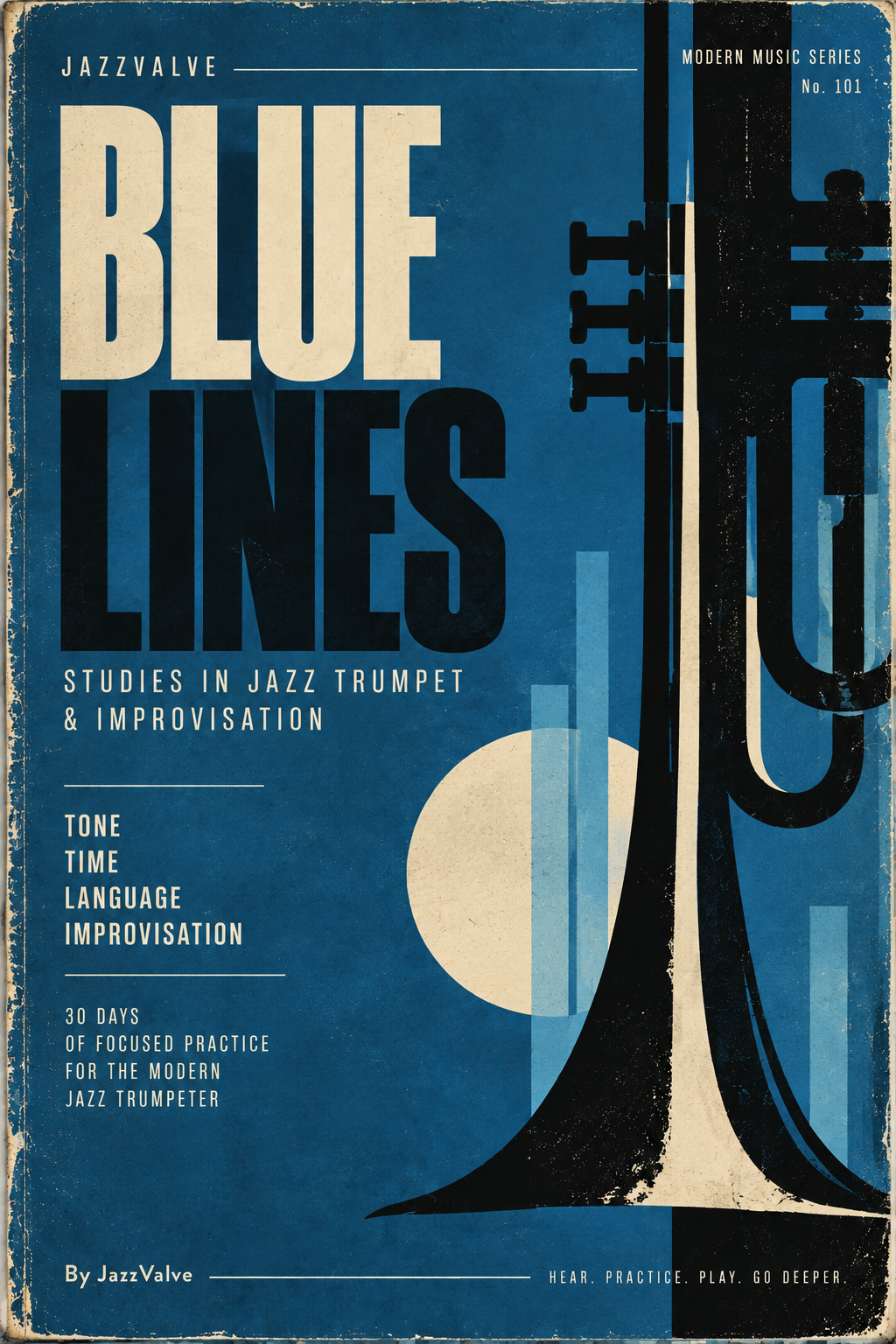
Blue Lines
Thirty days of focused B♭ trumpet practice: tone, time, jazz language and improvisation.
Email signup required
Get Blue Lines freeTrumpet pedal tones are sounds below the ordinary low register. On a B♭ trumpet, written pedal C is C3, an octave below the open written C4 just beneath the staff. Both use open fingering in the comparison below. C4 sounds concert B♭3; pedal C3 sounds concert B♭2. If you're still learning to start your regular low C cleanly, spend your time there first. Pedal C can wait.
JazzValve
Practice This In JazzValve
Open in the app →
Why pedal C doesn't feel like your usual low note
Take the valves out of the picture for a moment. With none pressed, written C4 is the lowest ordinarily resonant open trumpet note. The octave below it is the pitch that would sit at the bottom of that harmonic series. But, as the University of New South Wales Music Acoustics group explains, the trumpet doesn't offer a normal resonance at that pedal pitch. The note can sound, but it does not normally feel as securely settled as the C above it.
Terms vary a little in teaching. Some teachers call any note below the usual written low F♯3 a “pedal”; others distinguish the harmonic-series pedal from the in-between pitches, which may be called false tones. Here, pedal C always means written C3 with open valves. Written F♯3, pressed 1+2+3, is the standard low edge of the ordinary fingering chart and sounds concert E3. It's not the pedal C target. For regular-range notes, use Yamaha's standard fingering chart; don't treat this article as a fingering chart for the pitches in between.
Is it worth practicing?
Some teachers use pedal work to explore flexibility and consistent sound across registers. The University of Alabama study of collegiate trumpet instruction describes James Stamp's use of the low register in this way. Brian Shook's practice compendium offers another example of including pedal-register work in a larger practice routine. These are approaches to practice, not promises that pedal tones will extend your range.
A better reason to try one is curiosity about how an easy sound starts down low. You don't need to add a pedal drill to every warm-up. If you can't return to your ordinary middle and low notes comfortably afterward, leave it out and work on those notes. It matters more that the phrase you actually play starts cleanly.
JazzValve
Practice This In JazzValve
Open in the app →
A gentle open-C experiment
Use this short original study after a comfortable warm-up. All pitches are written B♭ trumpet pitches. Set a metronome around quarter note = 60, in 4/4, or count a quiet pulse yourself. Use a comfortable volume and a gentle start. The target note is an option; take the rest if it doesn't sound without extra effort.
Read the note and rhythm transcript below. Staff notation requires JavaScript.
Notes, rhythm and playing instructions
- Bar 1: beat 1, C4 half note, fingering open, sounds B-flat3; beat 3, half rest.
- Bar 2: beat 1, C3 half note, fingering open, sounds B-flat2; beat 3, half rest.
- Bar 3: beat 1, C4 half note, fingering open, sounds B-flat3; beat 3, half rest.
The written C3 in bar 2 is optional; rest for the whole bar if it does not speak comfortably. On B-flat trumpet, guide pitches are concert B-flat3, B-flat2, and B-flat3.
| Bar | Beats 1–2 | Beats 3–4 | Valves |
|---|---|---|---|
| 1 | Written C4 half note | Half rest | Open |
| 2 | Written C3 half note, optional | Half rest | Open |
| 3 | Written C4 half note | Half rest | Open |
Before bar two, hear an octave below your written C4. If you use a piano or pitch app that displays concert notes, the guide pitches are B♭3, B♭2, B♭3. Don't try to slide a tuner reading up to the target while holding a note that's strained. If only air comes out, or a different pitch speaks, finish that bar with a rest. Leave bar two silent the next time if needed.
The last C4 is the point of the test. Did it start as easily as the first one? If it now needs extra mouthpiece pressure, or if you notice yourself bearing down to make the lower note happen, stop the pedal work. Put the horn down for a break. If the regular note feels easy when you return, leave it there for the session.
What to practice if pedal C isn't there yet
Stay in the normal range. Try written E4 (1+2), D4 (1+3), and C4 (open) in that order. They sound concert D4, C4, and B♭3. Give each note two beats and then rest for two beats before starting the next. Let the D and C ring without trying to make them louder. If C is too low for a clean start right now, use an easier note and come back to it another day.
You can make this musical with one small goal: hear a clean ending on the lowest note of a phrase, without losing the pulse before the next entrance. That carries directly into the music you already play. For a short routine in the regular register, try JazzValve's trumpet warm-up exercises or get the free Blue Lines workbook. Email signup is required.
JazzValve
Practice This In JazzValve
Open in the app →
Free trumpet workbook
Blue Lines
Thirty days of focused B♭ trumpet practice: tone, time, jazz language and improvisation.
Email signup required
Get Blue Lines freeSources
- https://www.phys.unsw.edu.au/jw/brassacoustics.html#harmonics
- https://www.yamaha.com/en/musical_instrument_guide/trumpet/play/play002.html
- https://ir-api.ua.edu/api/core/bitstreams/6f40b0f5-bffa-4b86-b90a-d47844f42d81/content
- https://www.brianshook.com/resources/Studio-Handouts/20150811-Trumpet-Compendium.pdf