Justin Comstock · Founder of JazzValve
Becoming a Beginner Again: How Jazz Records Led Me to the Trumpet
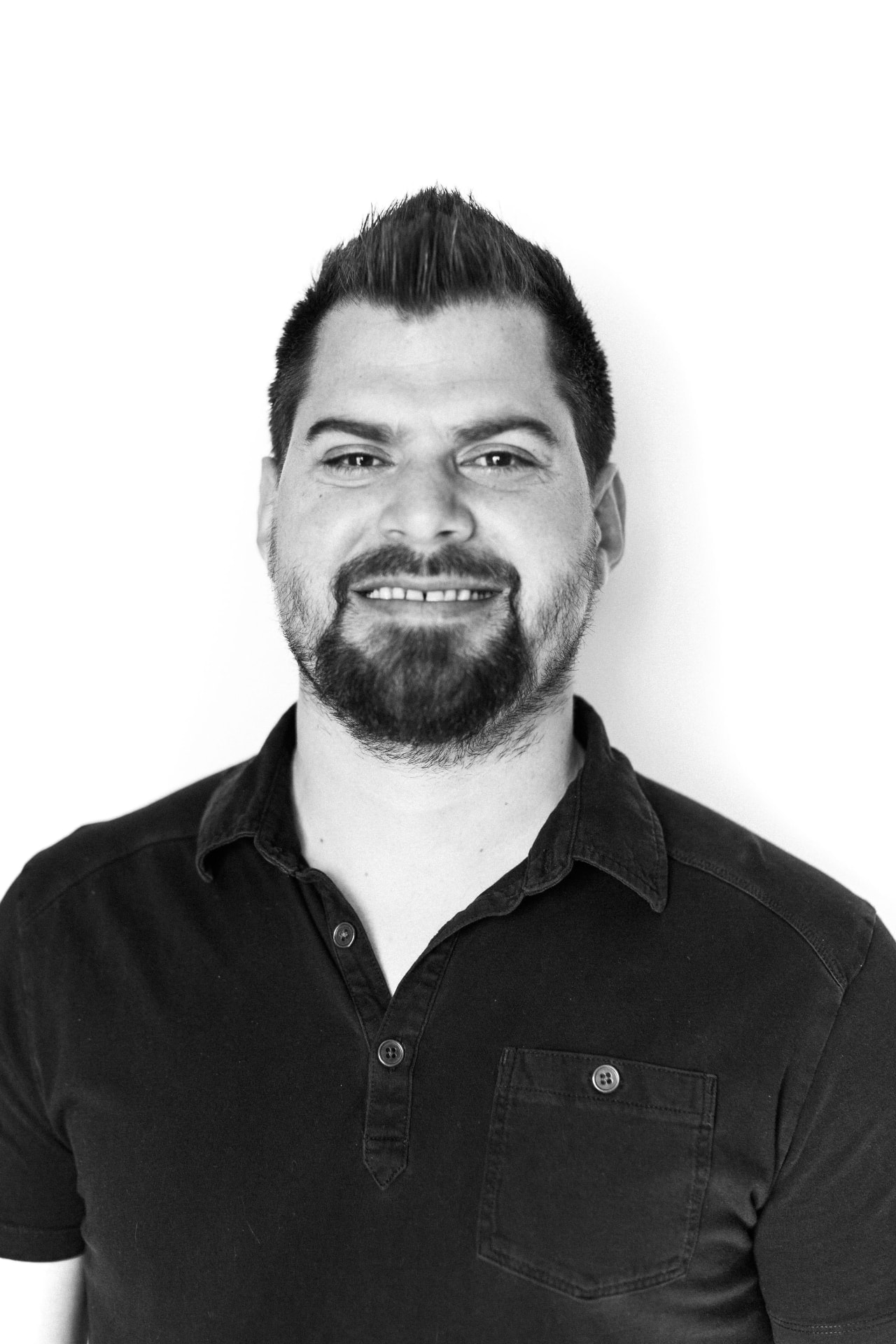
Justin Comstock
JazzValve founder
For publications: this is Justin’s first-person account. Share this page to link directly to the story.
For nearly three decades, guitar was the instrument through which I understood music.
It was where I learned scales, harmony, phrasing, improvisation, tension, release, and the strange relationship between theory and feel. Over time, those things became familiar. Not easy, exactly, but familiar.
Then trumpet made all of it feel new again.
My path to the instrument didn’t begin with a teacher, a method book, or a childhood band program.
It started with records.
I’ve always loved listening deeply to music, and over the years I became increasingly drawn to jazz. The more time I spent with those records, the more my ear kept finding the trumpet.
Chet Baker was one of the first players who really pulled me in.
There was something about the intimacy of his playing that felt different to me. He didn’t need to crowd a phrase with notes. The space mattered. The tone mattered. The shape of a simple melodic idea mattered.
Miles Davis affected me in a different but related way.
His playing reinforced the idea that restraint could be powerful. That intention mattered more than volume. That silence could be part of a phrase. That one note, placed correctly, could carry more weight than twenty played without purpose.
As a guitarist, I already understood those ideas in theory.
But listening to them through the trumpet made me want to understand them physically.
Eventually the question became unavoidable:
What would it actually feel like to play this instrument?
So I bought a trumpet.
And after nearly thirty years as a guitarist, I became a beginner again.
Three Valves Changed Everything
The experience was humbling almost immediately.
On guitar, I could see patterns. Scales lived under my fingers. Chord shapes were physical objects. Intervals had geometry.
Trumpet stripped all of that away.
Suddenly, I had three valves, air, embouchure, articulation, and a sound that depended on an entirely different relationship between the body and the instrument.
Concepts I had known for years had to be rediscovered.
What did a major scale actually feel like when there were no frets underneath it?
How do you think about phrasing when every phrase has to account for breath?
How do you build a melodic idea when you can’t rely on familiar finger patterns?
How do you create space when the act of producing the note itself is completely different?
The trumpet forced me to slow down.
That was probably the most valuable part.
Hearing Jazz Differently
Once I started learning trumpet, I also started listening to jazz differently.
Records I thought I knew suddenly opened up.
I began noticing where a player breathed.
I paid closer attention to articulation.
I started wondering how certain phrases sat on the valves.
I noticed how often the most memorable lines weren’t complicated at all.
A phrase might be just a few notes, but the shape, timing, tone, and placement gave it meaning.
That changed the way I listened to Chet Baker.
It changed the way I listened to Miles.
It changed the way I listened to hard bop.
And surprisingly, it changed the way I thought about guitar too.
When you step away from the instrument you know best, you lose your shortcuts.
That can be uncomfortable.
It can also be incredibly clarifying.
The Gap I Kept Running Into
As I learned, I noticed something else.
There were plenty of trumpet resources for technique.
There were plenty of jazz theory books.
There were plenty of transcriptions.
There were plenty of videos.
But I kept wanting something narrower.
I wanted a place where I could open a practice session and immediately work on usable jazz language.
Not just scales for the sake of scales.
Not theory for the sake of theory.
Not random licks with no context.
I wanted a structured bridge between basic trumpet practice and actual improvisational vocabulary.
That question eventually became the seed for JazzValve.
Why I Built JazzValve
JazzValve is the practice tool I wanted while learning.
It’s built specifically for jazz trumpet players who want a structured way to work on scales, triads, riffs, melodic lines, and improvisational vocabulary.
A lot of the inspiration comes from the hard bop language of the 1950s and 1960s — the era that originally drew me so deeply into trumpet.
The goal is simple:
Open the platform.
Know what to practice.
Spend ten or fifteen focused minutes working on something musical.
Then take that idea back to the horn.
I didn’t want JazzValve to feel like a giant course library.
I wanted it to feel like a practice room.
Something focused.
Something useful.
Something that helps turn abstract musical ideas into things your ears and fingers actually recognize.
The Value of Starting Over
The older I get, the more I appreciate how rare it is to willingly become bad at something again.
Experience makes us efficient.
But efficiency can also make us predictable.
Learning trumpet disrupted that.
It gave me back a kind of curiosity I hadn’t felt in a long time.
I had to ask basic questions again.
I had to listen more carefully.
I had to accept slow progress.
I had to enjoy small wins.
A clean note mattered.
A simple phrase mattered.
A scale that finally felt natural mattered.
And somewhere in that process, I realized that becoming a beginner again hadn’t taken anything away from the musician I already was.
It added something.
The trumpet made me listen differently.
It made me think differently.
It made me practice differently.
And eventually, it gave me something worth building.
That became JazzValve.
Maybe that’s the larger lesson for me.
Sometimes the best way to deepen what you already know is to step into something you don’t know at all.
And sometimes a record you’ve heard a hundred times can still change the direction of your life.
The practice room is open.
Open JazzValve →