Technique · October 27, 2026
By Justin Comstock · JazzValve creator, longtime guitarist and adult trumpet learner · Updated October 27, 2026
Choosing Online Jazz Trumpet Lessons: Teacher, Course, or Practice App?
Compare live teacher feedback, course prerequisites, and practice apps to choose online jazz trumpet lessons that fit your level, schedule, and budget.

Free trumpet workbook
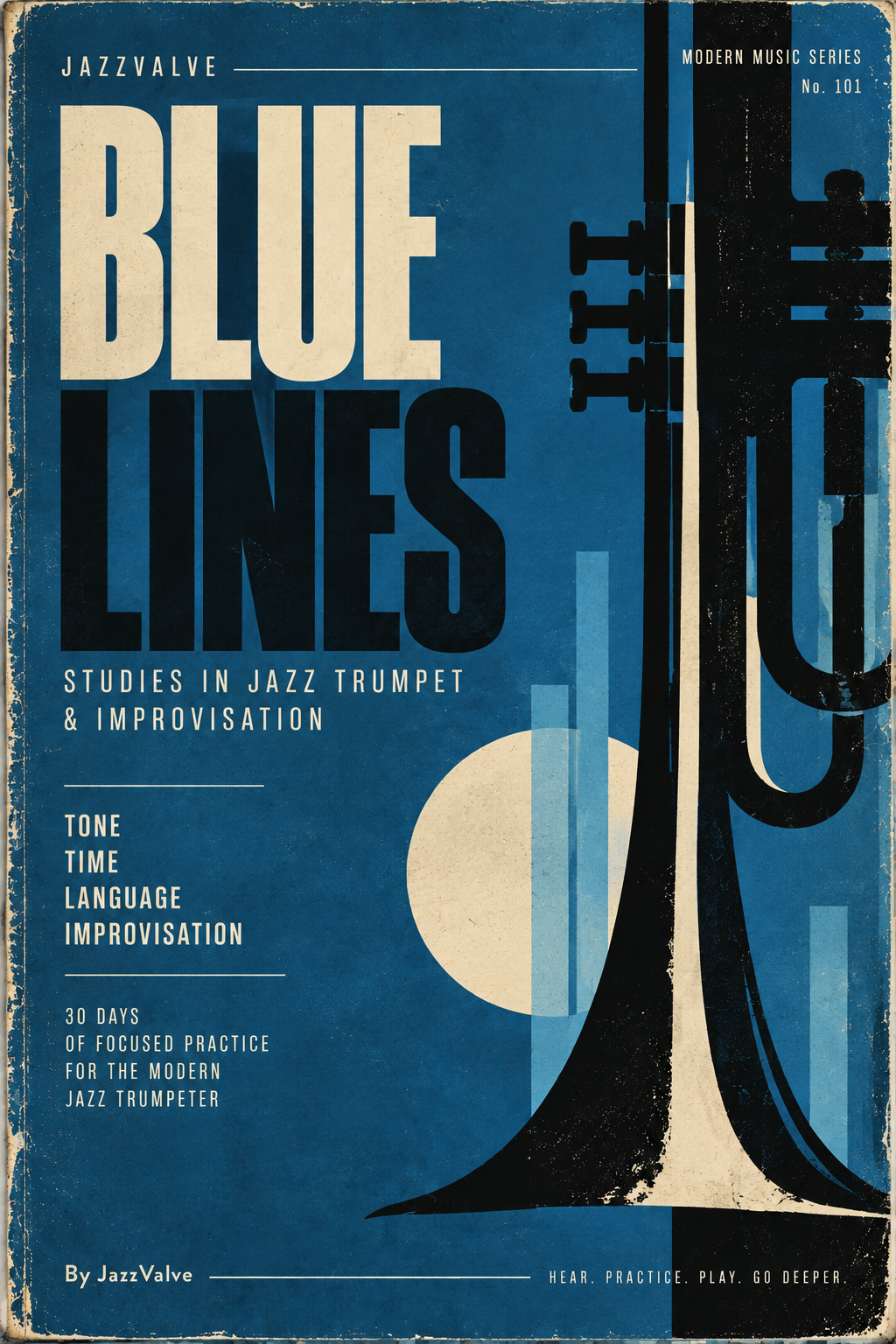
Blue Lines
Thirty days of focused B♭ trumpet practice: tone, time, jazz language and improvisation.
Email signup required
Get Blue Lines freeIf you are comparing online jazz trumpet lessons, start with the help you need this week. Do you need someone to hear why a phrase falls apart, a clear sequence of things to learn, or practice material for an assignment you already understand?
A live teacher is worth considering when you need individual feedback. A recorded course can provide a route through unfamiliar material. A practice app can help you repeat and explore the ideas you are learning. You can combine them, but choose one main source of direction before adding more.
This guide is written by JazzValve. Provider examples illustrate learning formats, not a ranked comparison.
Choose a live teacher when you need a second pair of ears
You might know the notes yet lose your place in a blues, rush a phrase, or struggle to keep your sound consistent. A teacher can listen, ask you to try something different, and adjust the next assignment to what happens.
Look for someone who teaches your current level and covers both trumpet fundamentals and jazz. A confident improviser who is new to trumpet has different needs from an experienced band player who has never taken a solo. Tell the teacher which description fits you.
Live online lessons require an appointment and a usable connection. Lessonface describes its live lessons as video meetings, for example. Ask your teacher about camera position and audio setup before the first session.
Bring these questions to a trial or introductory lesson:
- What would you have me work on first, and why?
- What should I listen for when practicing alone?
- How much playing and listening should I plan between lessons?
- Can I send a short recording between appointments, and is that included?
Leave with one manageable assignment and a clear reason for it. You should understand what to do when you pick up the horn tomorrow.
JazzValve
Practice This In JazzValve
Open in the app →
Choose a course when you need a sequence to follow
A recorded, self-paced course can suit an irregular schedule and let you revisit an explanation. For example, John Raymond’s Jazz Trumpet Routine describes structured video lessons, practice plans, and self-paced study. That illustrates a format, not a recommendation that one course suits every player.
Before enrolling, inspect a sample lesson and the syllabus. Check these prerequisites:
- Does “beginner” mean new to trumpet, or new to jazz?
- What reading, scales, chord symbols, and playing range are assumed?
- Are trumpet parts supplied, or will you need to adapt examples?
- How much practice does each lesson expect before you move on?
The title alone will not answer those questions. Berklee Online’s Gary Burton Jazz Improvisation course expects prior improvisation experience and familiarity with chord symbols and common chord scales. An interesting syllabus can still be the wrong starting point.
Check feedback separately from delivery. A course may combine recorded modules with instructor reviews, scheduled classes, or peer responses. Ask who hears your playing, how often, and whether feedback is included. “Online” does not automatically mean self-paced, and recorded lessons do not automatically mean studying without a teacher.
Use a practice app to support an assignment
An app fits most naturally when you can name the work: learn a short phrase, review a scale, or explore a triad. It gives that work a place in your routine. If you are unsure why something sounds wrong, arrange feedback rather than collecting more exercises.
JazzValve offers triads, scales, and hard bop licks with audio examples and valve fingerings for B-flat trumpet. Use it alongside a teacher’s assignment or a course topic. Treat the examples as material to practice; do not assume playback includes someone assessing your performance.
For a starting topic, the jazz trumpet scales guide connects scale practice with short phrases. Choose one idea and stay with it long enough to hear what changes.
JazzValve
Practice This In JazzValve
Open in the app →
Make the format fit a real practice week
Here is a sample week for a player who already has a comfortable fundamentals routine. Keep that routine, include rests, and adjust the extra work with your teacher. These are small practice blocks, not a required workload.
- Monday: After your lesson or course segment, write down one target. Record a short first attempt.
- Tuesday: Spend five to ten minutes listening to and repeating a small piece of the assignment.
- Wednesday: Repeat it, then change one rhythm or ending. Keep the rest familiar.
- Thursday: Record again. Note one specific question for your teacher or course reviewer, if feedback is included.
- Friday: Compare your recordings. Repeat the assignment next week if it still needs attention.
A useful target might be finishing a short phrase without rushing its last two notes. That gives both practice and feedback a clear focus. Watching another lesson can wait.
Decide what you can sustain before paying
Compare the commitment in your calendar as well as your budget. A regular teacher appointment creates a deadline; self-paced study asks you to create one yourself. Either arrangement needs room for practice between explanations.
Before committing, check:
- Time: Can I attend the sessions and practice between them? Are there submission deadlines?
- Feedback: Who will respond when I get stuck, and how long might I wait?
- Budget: What is the cost of the lesson cadence or course I will actually use, including any extra feedback fees?
- Flexibility: What happens if I miss a lesson, pause studying, or need longer on a topic?
- Fit: Can I explain the first assignment after trying a sample or introductory lesson?
If weekly lessons are beyond your budget, ask whether less frequent check-ins with a written practice plan are workable. If fixed appointments are difficult, look for self-paced study with a clearly described feedback option. Confirm availability rather than assuming either arrangement is offered.
For a written starting plan, Blue Lines is JazzValve’s free 30-day B-flat trumpet workbook. Email signup is required. It is designed to sit alongside your teacher’s fundamentals routine, and you can repeat days rather than rush through them.
Choose the format that makes your next practice session clear and gives you a way to resolve questions. Add another resource when it fills a specific gap.
JazzValve
Practice This In JazzValve
Open in the app →
Free trumpet workbook
Blue Lines
Thirty days of focused B♭ trumpet practice: tone, time, jazz language and improvisation.
Email signup required
Get Blue Lines freeSources
- https://www.lessonface.com/content/how-it-works
- https://john-raymond.com/learn
- https://online.berklee.edu/courses/gary-burton-jazz-improvisation
- https://jazzvalve.com/
- https://jazzvalve.com/blog/guides/jazz-trumpet-scales
- https://jazzvalve.com/workbook